1
See You at AUSA!
Come see us 12-14 Oct at AUSA in DC, Booth 415! Retirement Services, Soldier For Life, MyArmyBenefits, and Army PaYS will all be there to provide information and answer your questions.
Ask questions, plan, and repeat
By George Coleman, Lt. Col., USA, (Ret.) and Reina Vasquez January 2026
While there is no official percentage that applies to all military retirees across the branches, data from the Army indicates that approximately 25% of transitioning Soldiers stay within the metropolitan area of their last duty station. But what if your last duty station is overseas? That presents an additional layer of questions and planning.
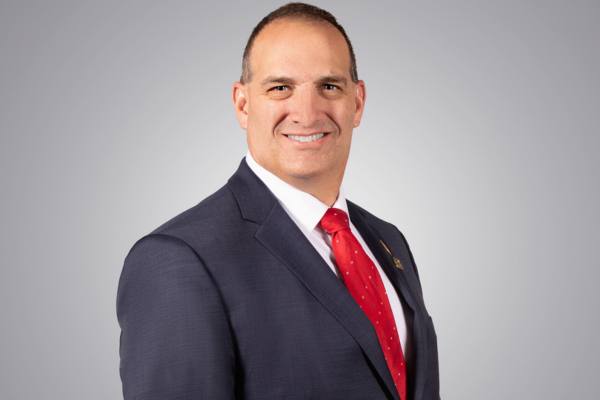
George Coleman, whose last assignment was in Europe faced this exact situation upon his retirement in 2023. The now retired Army Lt. Col., originally from California, knew that he couldn’t plan his next move without input from his family.
When planning for retirement, Coleman emphasizes the need to define your personal priorities, noting that it is a deeply individual decision. “My wife’s family is in Connecticut, so as a family, we had the ‘Where do you want to go’ discussion. We looked at the states that do not tax military retirement pay, options and opportunities for our children’s education, and other life goals.”
When the time came, the Coleman family did indeed move from Wiesbaden, Germany, to Connecticut. Those discussions were invaluable, in that everyone had a say in why they wanted to move. Coleman’s oldest daughter had her sights on the University of Connecticut.
“It was one of her top 2 schools,” he says. “Discussions like these are about all of our goals, not only the short-term, but long-term ones as well.” “Taking into consideration what each member of my family wanted was important, after all, they moved whenever and wherever the Army told us to go for so many years … now it was time for their input.”
Planning, planning, and more planning would become a focal point for Coleman, especially after being in the Soldier for Life office from 2014 until 2018. “I’d listen to a lot of conversations from the Army Retirement Office, with which we were co-located” he says. “I never knew there were so many options available for Retired Soldiers.” Although Coleman had another five years of service before he could submit for retirement, he now knew this transition would be unlike any other.
“The decision as to where we would live after my retirement took me and my wife 18 months to make. If you don’t know where you’re going, you don’t know how to even begin to get there. We had to take things step by step,” Coleman emphasized.
“Most Soldiers only retire from the Army once, so you don’t know what that process actually looks like; you hear about people going through it, but until you’ve gone through it, you don’t understand the full weight of some of the decisions you’ll have to make.” “What stuck with me the most was ‘go early, go often,’ pertaining to the Army Transition Assistance Program (Army-TAP). “There’s so much information, you just can’t take it all in the first time,” he says.
“Whether you plan to stay until 23 or 25 years, or retire at 20, you should still go as soon as you hit your 18- year mark.” This is especially true for leaders, Coleman says, “You’re going to have Soldiers who work for you, who are going to need to go to TAP at some point and having an understanding of what they’re going to go through, can help you help them make informed decisions.”
Leaving a military career after nearly a quarter of a century, Coleman knew there’d be adjustments, but realized one of the challenges ahead would be preparing to re-enter the civilian workforce – something he had not done in more than two decades. “I was in high school in the early 90s the last time I worked as a civilian, so I needed to ask myself, ‘what does this look like’ and ‘what do I want to do now?’”
Despite 24 years of serving in the Army as a signal officer, working with networks, radio, satellite communications, and cybersecurity, and numerous certifications for each of these specialties, Coleman found his roles did not necessarily translate as easily as he initially thought from the government to civilian sector – an unexpected challenge.
“A lot of veterans end up leaving their first civilian job after they retire from the military, primarily because ‘we don’t know what we don’t know,’ and that’s okay,” Coleman says.
“It happened to me too. Keep your options open!”
Through the hills and valleys of his transition, Coleman says he got honest with himself about what he wanted to pursue in this next chapter. What did he really miss about being in the Army? As it turned out, Coleman missed being around people; he missed mentoring. “Don’t underestimate the social aspect of your military experience,” he says. “A lot of what we do in the military is mentor and coach.” Coleman eventually found his niche, balancing numbers and meeting people. Coleman now enjoys his role as a personal financial adviser. “I get to crunch numbers, talk to our clients, and get to know a lot of people,” he says.
Asking yourself and your immediate family members any and all questions you may have during your transition is key, as many topics lead to other lesser-known questions and concerns. Is buying a home on your list? How big or small would you like your primary residence? Do you need a job after retirement? What will your pension be, and will you be receiving any Veterans Affairs (VA) benefits?
“Taking my family, especially my wife to the VA brief was crucial. A lot of spouses don’t know what they’re entitled to, if you, the Retired Soldier, pass before they do. You learn how important it is to leave something akin to a continuity book for your spouse. Families are entitled to different benefits, and you want your family taken care of as best as possible,” Coleman says.
A considerable amount of time was also spent on prep work, Coleman says. “I worked with a VA representative before my retirement date, to complete my Benefits Delivered at Discharge (BDD).” BDD allows separating service members to file for disability compensation up to 180 days before separation or retirement. “I spent about 6 months going through my medical record, making sure my claim aligned with what was documented in my records. I know it sounds cliché, but ‘help them, help you.’ You’ve got to prioritize yourself!”
Ultimately, you must find the approach that works best for you. You may want to write and tailor your resumes to your ‘dream job’ openings first and let your opportunities dictate where you move; or you may know exactly where you want to live but are less sure about your next career path.
There are so many questions to ask and plans to make, but you’ve got to start somewhere. You may have six or seven priorities, and they’re all competing, but that’s okay.
Make your list! That is the most important.