Military spouses get benefits after retirement (too)
By MyArmyBenefits staff May 2026
Serving in the military is more than just a job, it’s a family commitment. After your service member retires, as a military spouse, you still have access to many of the benefits you enjoyed while your loved one served on active duty. To keep access to these benefits, make sure your information stays current in DEERS after retirement. Even if your spouse retired from the military years ago, it can be helpful to review some of the benefits available:
Healthcare
Open season for healthcare using TRICARE and/or the Federal Employees Dental and Vision Insurance Program (FEDVIP) begins in November each year for coverage starting Jan. 1st of the following year. After open season, either retirement from the military or a qualifying life event (QLE) must occur to enroll. Following retirement, military spouses remain eligible for TRICARE health coverage (https://tricare.mil/Plans/HealthPlans) under TRICARE Prime (https://myarmybenefits.us.army.mil/Benefit-Library/Federal-Benefits/TRICARE-Prime?serv=128), TRICARE Select (https://myarmybenefits.us.army.mil/Benefit-Library/Federal-Benefits/TRICARE-Select), or the TRICARE Prime Option – U.S. Family Health Plan (https://tricare.mil/Plans/HealthPlans/USFHP). Additionally, for 2026 coverage, a new option, TRICARE Prime Demo (https://tricare.mil/Plans/SpecialPrograms/TRICARE-Prime-Demo), was introduced as a pilot available only in Atlanta and Tampa. If you do not choose to enroll in TRICARE or another health plan, you can receive care at military treatment facilities only on a space-available basis. Once you reach age 65 and enroll in Medicare parts A and B, you are automatically covered by TRICARE For Life (TFL) (https://myarmybenefits.us.army.mil/Benefit-Library/Federal-Benefits/TRICARE-For-Life-(TFL)). TFL acts as your secondary payer to Medicare (https://tricare.mil/Plans/HealthPlans/TFL), which is the primary payer. This means TFL steps in to cover most of the costs that Medicare doesn't, such as co-payments and deductibles. The result is comprehensive, low-cost coverage.
Education & Employment
Retirement doesn’t mark the end of educational and career support for military spouses. Opportunities for continuing your education after your spouse retires include scholarship programs—at the federal, state, and local levels. MyArmyBenefits (MAB) (https://myarmybenefits.us.army.mil/) provides information on several scholarships, such as the Patty Shinseki Spouse Scholarship (https://myarmybenefits.us.army.mil/Benefit-Library/Federal-Benefits/Mrs-Patty-Shinseki-Spouse-Scholarship-Program), and the Tillman Scholars Program (https://myarmybenefits.us.army.mil/Benefit-Library/Federal-Benefits/Tillman-Scholarship-Program). Be sure to check state scholarship information in the MAB state/territory fact sheets (https://myarmybenefits.us.army.mil/Benefit-Library/State/Territory-Benefits).
There are also benefits available to help with a job search or career change. For 180 days after your service member retires, you still have access to the resources of the Spouse Education and Career Opportunities (SECO) (https://myarmybenefits.us.army.mil/Benefit-Library/Federal-Benefits/Military-Spouse-Education-and-Career-Opportunities-(SECO)) program on Military OneSource, offering assistance through career coaching, resume building, and the Military Spouse Employment Partnership (MSEP) (https://myarmybenefits.us.army.mil/Benefit-Library/Federal-Benefits/Military-Spouse-Employment-Partnership-Program-(MSEP)) job board. You also have access to the Employment Readiness Program through Army Community Service (ACS) (https://myarmybenefits.us.army.mil/Benefit-Library/Federal-Benefits/Employment-Readiness-Program-(ERP)) centers for help with job search skills, education, training, and more with no time limit on eligibility.
Installation Access
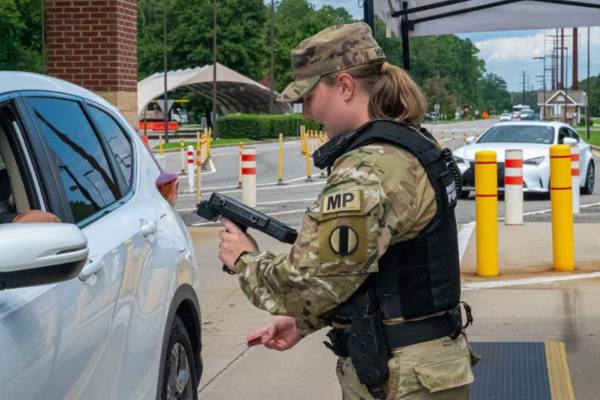
Your military spouse I.D. card allows you continued access to military installations after your Soldier retires. Not just access, but use of facilities such as the commissary (https://myarmybenefits.us.army.mil/Benefit-Library/Federal-Benefits/Defense-Commissary-Agency-(DeCA)), the PX/BX (https://www.shopmyexchange.com/), military treatment facilities for healthcare (https://dha.mil/findDHA), and MWR facilities and services (https://myarmybenefits.us.army.mil/Benefit-Library/Federal-Benefits/Morale-Welfare-and-Recreation-(MWR)) (fitness centers, recreation centers, tickets and travel savings, and more). To find a military installation near you, use the MAB Resource Locator, (https://myarmybenefits.us.army.mil/Benefit-Library/Resource-Locator) where you will also find the location of the I.D. card office.
Retirement is both an ending and a beginning. Although military life changes, many of the benefits that support spouses remain firmly in place. Be sure to bookmark the MyArmyBenefits website (https://myarmybenefits.us.army.mil/) to view all federal and state/territory benefits information (https://myarmybenefits.us.army.mil/Benefit-Library) and stay up to date on any benefit changes that affect Soldiers and their families no matter where they are in their careers, even after military retirement.