Happy 70th anniversary, Army Retirement Services!
By Army Retirement Services February 2026
On Nov. 14, 1955, then-Army Chief of Staff, Gen. Maxwell D. Taylor created the Army Retirement Services Office (Army RSO) with the mission of serving as an advocate and resource for the approximately 79,000 Retired Soldiers at the time. By the mid-1990s, there were 500,000 Retired Soldiers, and today, Army RSO serves more than a million Retired Soldiers in all three components, including more than 251,000 surviving spouses. We have expanded to 130 Retirement Services Officers (RSOs) worldwide, providing retirement benefits, information, and referrals to Retired Soldiers and their families, taking care of them post-retirement.
Director of Army Retirement Services, Maria Bentinck, emphasized the significance of reaching this historic milestone.
“Seventy years of Retirement Services reflects a steadfast commitment to all who have worn the uniform – whether they are currently serving or have already retired. Our Soldiers, past and present, along with surviving spouses remain an enduring part of our Army family. They deserve our strongest advocacy and support.”
Bentinck also highlighted the responsibility of serving such a large and diverse retired community.
“As our retired population grows, so does our obligation to serve them with precision, compassion, and excellence. Every Soldier—past, present, and future—deserves to understand the benefits they’ve earned and to feel connected long after their service ends.”
Presently, Army RSO is charged with overseeing the current retirement services program and writing Army policy for Soldiers preparing to retire. Retirement planning is a critical service we provide to Soldiers who have 17 or more years of service. To ensure long-term readiness, we communicate with those still wearing the uniform and work in collaboration with field-based RSOs, by delivering essential briefs, checklists, and counseling in preparation for their eventual retirement.
As the population of Retired Soldiers has grown, so too has the retirement services program. The Army RSO works in partnership with DOD and the Defense Finance and Accounting Service (DFAS) for the four military retired pay plans, the Survivor Benefit Plan, the Annuity for Certain Military Surviving Spouses (ACMSS), the MyArmyBenefits website, the Army Chief of Staff’s Retired Soldier Council, portions of the Uniformed Services Former Spouse Protection Act (USFSPA), the RSO training and certification program, Army Regulation 600-8-7 (Retirement Services Program), and strategic communications about the program.
Serving our retired community involves countless tasks for Army RSO, but it is a mission that is highly rewarding, says Deputy Director of Army RSO, Patricia Cruz. “Retired Soldiers bring value to every community they’re a part of; whether they advocate for the value of a veteran in their new career field, or they are busy volunteering, their selfless service continues, it does not stop once they take off the uniform. It is our duty to make sure we honor their service and ensure that they know everything they’re entitled to.”
Echoing Cruz, our commitment to Soldiers does not end with their service. Army RSO is here to ensure our retiring Soldiers feel supported, appreciated, and connected to their Army family, ultimately strengthening the prosperity of our nation.
The two main purposes of Army RSO, says Cruz, are to prepare Soldiers and their families for their retirement and to keep in constant communication with those who have already retired.
"A substantial portion of our work is on updating the retired community on laws, changes, and benefits they’ve earned."
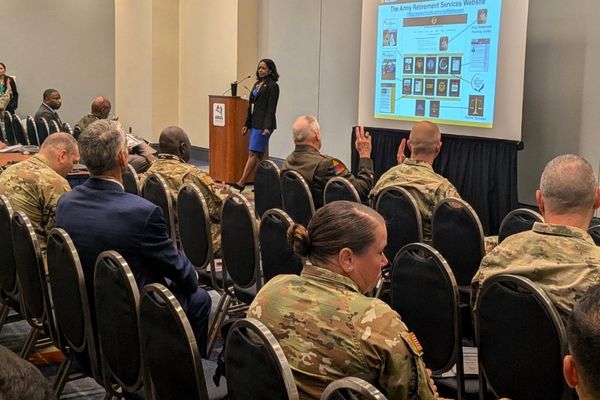
In addition to communicating with retiring and Retired Soldiers and their families with newsletters and a comprehensive website, Army RSO’s services and support is executed by the RSOs in the field and our partner agencies.
“Our RSOs are really our key folks in the field that are going to help on an individual level. We’re here when they hit those roadblocks and can provide that connection with different agencies on a higher level,” said Cruz.
One of the things we do very well in this office is listen to what’s happening in the field and if there is a trend, we work diligently to rectify the issue, asking questions like: what caused the issue, when did it start, who is being impacted, and so forth, she said.
“If we weren’t out there teaching courses and going to Retiree Appreciation Day events, and having the relationships we have with the RSOs, we wouldn’t get those examples and be able to work with agencies like DFAS to resolve issues together,” Cruz stated.
Mitigating issues before they become problems and minimizing negative impacts to our retired community is something Army RSO excels at, due in part to the collaboration with various stakeholders and partners.
As we commemorate 70 years of supporting our Soldiers, we thank you for allowing us to serve you, and invite you to continue serving the nation, in your communities, and on behalf of the Army. Who better to tell the Army story than the men and women who have worn the uniform?